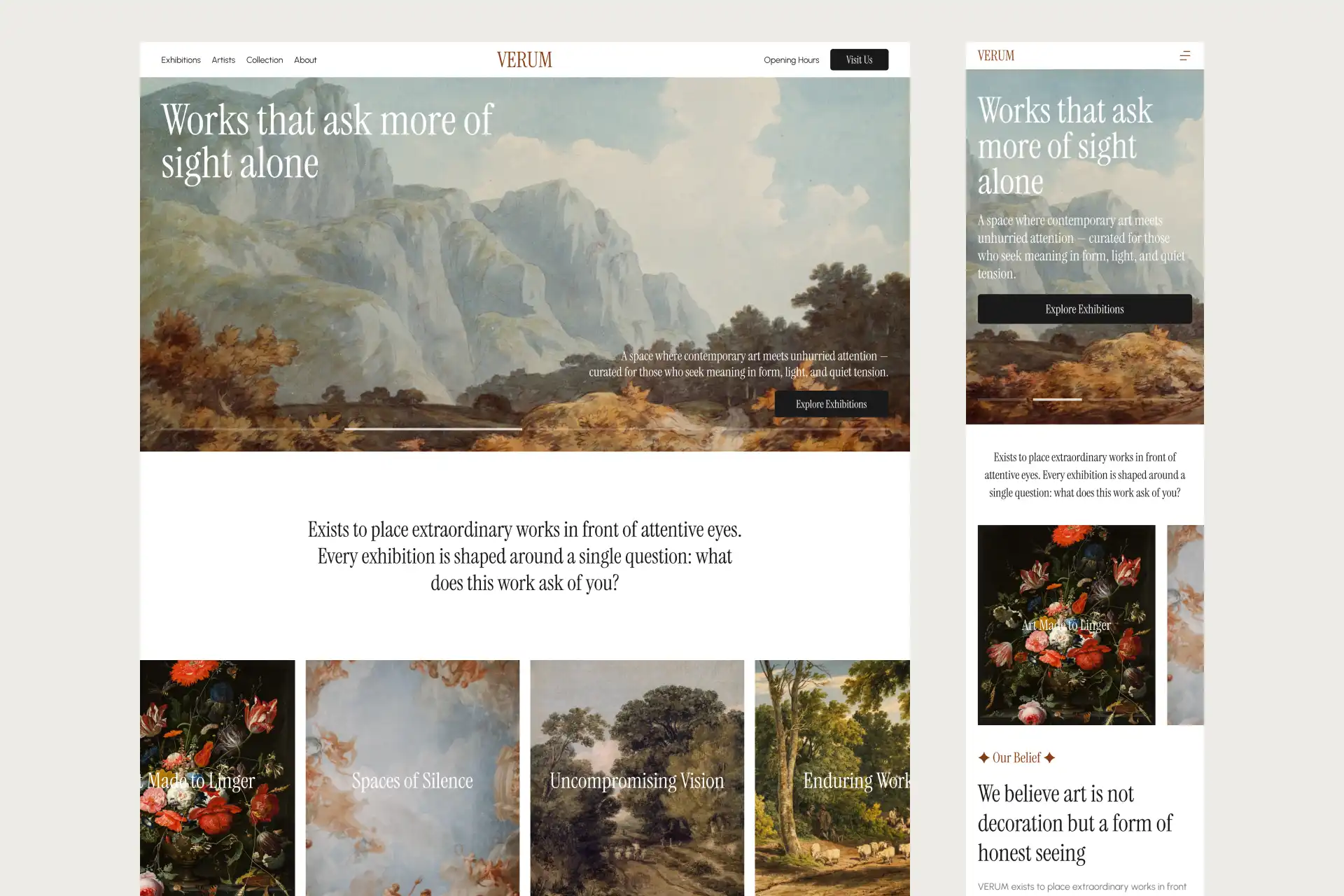
Verum is a contemporary art gallery platform designed to showcase exhibitions, artists, and collections in a sophisticated digital space.
The challenge was to create a landing page that mirrors the refined, minimalist aesthetic of modern gallery spaces while making art accessible and engaging online. In the competitive art world where presentation is paramount, the design needed to let the artwork breathe while providing intuitive navigation and compelling calls-to-action that drive gallery visits and art inquiries.
Design Process
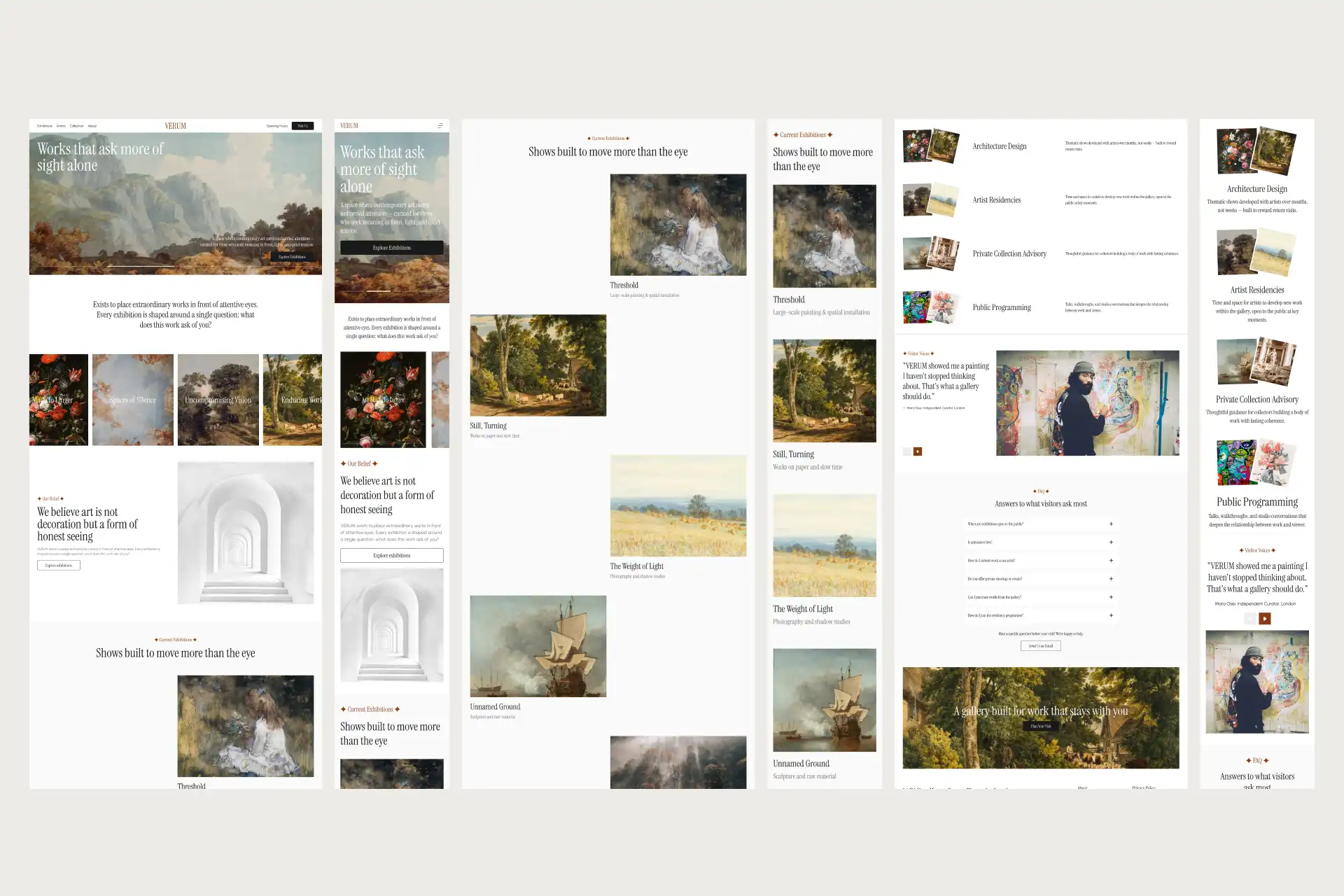
The design process centered on the principle that great gallery design should be invisible—directing all attention to the art itself. A monochromatic color palette with stark black and white contrasts was chosen, punctuated only by the vibrant colors within the artworks themselves. The layout employs generous white space, large-scale imagery, and minimal typography to recreate the serene, contemplative atmosphere of physical gallery spaces. Key sections include a bold hero with featured exhibitions, a grid-based collection showcase, artist profiles with biographical details, upcoming events calendar, and a clean contact section—all structured to guide visitors through discovery while maintaining visual harmony and breathing room around each piece.
Outcome
The final design successfully translates the gallery experience into digital form through meticulous attention to negative space and typographic restraint. Full-bleed artwork images command attention while subtle animations and hover states add interactivity without distraction. The monochromatic framework ensures that colorful artworks become the focal points, creating natural visual hierarchy that guides the eye. Strategic placement of inquiry CTAs and exhibition details provides clear pathways for engagement, while the overall aesthetic positions Verum as a prestigious, museum-quality venue that respects both the art and the viewer's experience.
Conclusion
The Verum landing page demonstrates how digital design can honor the traditions of physical gallery curation while leveraging web-specific advantages like dynamic layouts and infinite scroll. Rather than competing with the artwork through busy interfaces or unnecessary decoration, the design serves as a pristine backdrop that elevates each piece. By embracing minimalism, intentional spacing, and restrained typography, Verum differentiates itself in the art world—offering not just a website, but a carefully curated digital exhibition space that respects the integrity of the art and the sophistication of its audience.